May 06, 2026 · By Talhah Bilal, ISSA-CPT
Home Gym Workout: Simple Muscle After 35 (No Excuses)
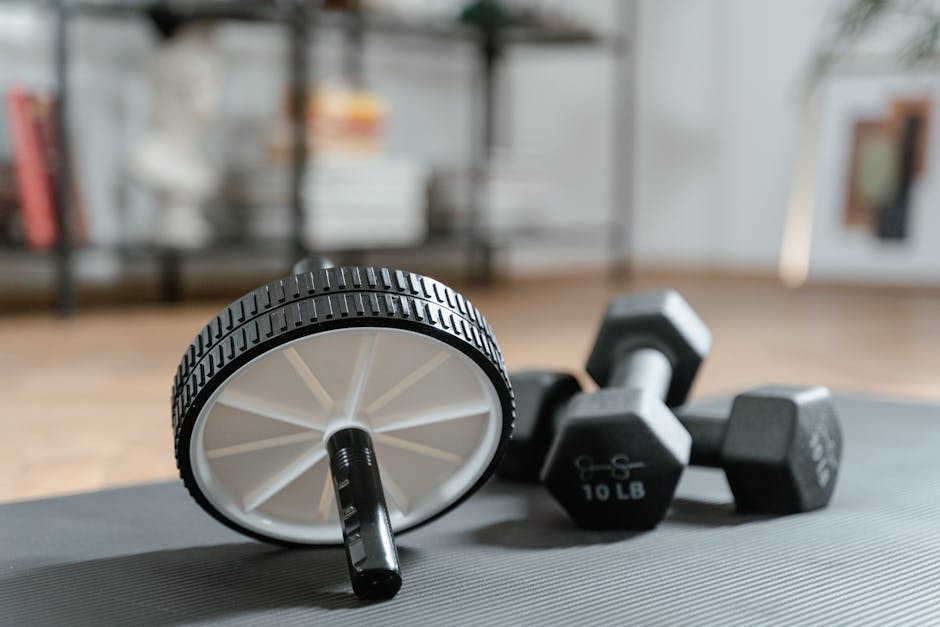
Think you need a fully-equipped gym to build muscle after 35? Think again. You can achieve significant gains with just a few key pieces of equipment and the right approach, focusing on intensity and intelligent exercise selection.
Dumbbell Rows: Back Strength Without a Pull-Up Bar
Many home gyms lack a pull-up bar, making back training challenging. The dumbbell row is a fantastic alternative that targets the lats, rhomboids, and traps. A study in the Journal of Strength and Conditioning Research showed that dumbbell rows elicit similar muscle activation to pull-ups, especially when performed with proper form.
After 35, maintaining back strength is crucial for posture and injury prevention. Sedentary jobs and age-related muscle loss can lead to rounded shoulders and back pain. Dumbbell rows counteract these effects by strengthening the muscles that support the spine.
To perform dumbbell rows effectively, use a weight bench or stable surface for support. Hinge at the hips, keeping your back straight, and pull the dumbbell towards your chest, squeezing your shoulder blades together. Control the eccentric (lowering) phase for maximum muscle engagement.
The Fix
THE FIX: Perform 3-4 sets of 8-12 repetitions per side. Focus on controlled movements and a strong mind-muscle connection. Add a pause at the peak contraction for increased intensity.
Tempo Training: Time Under Tension for Hypertrophy
Tempo training involves deliberately manipulating the speed of each repetition. A slow eccentric (lowering) phase, followed by a controlled concentric (lifting) phase, increases time under tension (TUT). Research suggests that TUT is a key driver of muscle hypertrophy.
As men age, their muscle protein synthesis rate naturally declines. Tempo training helps to overcome this by maximizing muscle fiber recruitment and metabolic stress. This translates to better muscle growth even with lighter weights.
Implement tempo training by using a 3-1-1-1 cadence: 3 seconds lowering, 1 second pause at the bottom, 1 second lifting, 1 second pause at the top. Apply this to exercises like squats, push-ups, and dumbbell rows.
The Fix
THE FIX: Use a 3-1-1-1 tempo for all your exercises. This will force you to use lighter weights at first, but the increased time under tension will lead to greater muscle growth in the long run.
Squat Variations: Maximizing Leg Day With Limited Weights
Bodyweight squats are a great starting point, but they eventually become too easy. Pistol squats (single-leg squats) and goblet squats (holding a dumbbell in front of your chest) are excellent progressions that increase the challenge without requiring heavy weights. Research shows single-leg exercises improve balance and stability.
After 35, maintaining lower body strength is vital for mobility and functional fitness. Squat variations help preserve muscle mass and bone density, reducing the risk of falls and injuries.
Start with assisted pistol squats, using a chair or wall for support. Progress to unassisted pistol squats as your strength improves. For goblet squats, hold a dumbbell close to your chest and squat as deeply as possible while maintaining good form.
The Fix
THE FIX: Start with 3 sets of 8-12 repetitions of goblet squats. If you are ready to progress to pistol squats, begin with 3 sets of 5-8 assisted reps, focusing on proper form.
Plank Series: Core Strength Beyond Crunches
The plank is a fundamental core exercise, but it can become monotonous. Add variations like plank twists, plank taps, and plank reaches to increase the challenge and target different core muscles. Studies demonstrate that dynamic plank variations improve core stability more effectively than static planks alone.
A strong core is essential for men over 35, as it supports the spine and improves posture. Core weakness can contribute to back pain and increase the risk of injuries during other exercises.
Perform a plank, then alternate twisting your hips from side to side (plank twists). Next, tap your shoulders with opposite hands (plank taps). Finally, reach one arm forward while maintaining a stable plank position (plank reaches).
The Fix
THE FIX: Perform each plank variation for 30-60 seconds, followed by a short rest. Aim for 3-4 rounds of the entire series. Focus on maintaining a straight line from head to heels.
Isometric Holds: Maximize Muscle Engagement
Isometric exercises involve holding a muscle contraction at a fixed angle. This type of training can increase strength and muscle activation, even without movement. Research indicates that isometric training can be particularly effective for improving strength at specific joint angles.
Isometric holds are a great way for men over 35 to continue to build strength, particularly if they are recovering from an injury or have limited range of motion.
Apply isometric holds to exercises like squats, push-ups, and dumbbell rows. Hold the position at the peak contraction for 5-10 seconds, focusing on squeezing the target muscles as hard as possible.
The Fix
THE FIX: Add isometric holds to your favorite exercises. For example, hold the bottom position of a squat for 5-10 seconds, or hold the top position of a dumbbell row, squeezing your shoulder blades together.
What I Use
Here’s my gear if you’re curious. No pressure.


FAQ
How often should I train at home?
Aim for 3-4 workouts per week, allowing for adequate rest and recovery between sessions. Focus on compound exercises and progressive overload to maximize muscle growth.
What should I eat after my home workouts?
Consume a protein-rich meal within 1-2 hours after your workout to support muscle recovery and growth. Aim for 30-40 grams of protein from sources like lean meat, fish, or protein powder.
Free: 7-Day Fat Burn Kickstart Plan
From Our Network